
Kinney Projected and Actual Dates
A projected release date is a calculation for a confined person. It is not proof of release. TDCJ also displays a parole eligibility date, which marks when review may become possible, and can later post scheduled release information after a release certificate reaches Classification and Records. The physical release event is separate.
A pretrial detainee has no sentence-based release date. Bond, a court order, dismissal, another hold, or transfer controls the next event. For a short Kinney County sentence, the judgment, jail credit, and Sheriff’s calculation matter. For a state-prison sentence, TDCJ controls the computation.
Find a Kinney Release Date
First identify whether the person is in the Sheriff holding facility, KCDC under another agency, or TDCJ elsewhere in Texas. A departure from KCDC may be a USMS, BOP, or ICE transfer rather than community release.
- Match the person with a strong identifier such as TDCJ number, SID, booking number, or cause number.
- For current TDCJ custody, open the TDCJ Inmate Information Search and read projected, maximum, and parole eligibility fields separately.
- For a Kinney jail sentence, obtain the judgment, jail credit, and Sheriff’s calculation.
- For pretrial custody, read the bond and court orders rather than estimating a date.
- Call the owning agency and record when the result was checked.
The Kinney County release-record route helps identify the custodian when the building or case type is unclear.
Texas Time Rules for Kinney
Government Code chapter 498 governs state-prison good-conduct time. TDCJ describes good time as a privilege linked to conduct, work, and self-improvement. Credits may be awarded, lost, or restored under agency rules. They do not erase the judicial sentence and are not earned while on parole or mandatory supervision.
There is no universal Texas rule that every person must serve 85 percent. Eligibility is offense-specific. Government Code section 508.145 contains different calculations based on the offense, date, sentence, and findings. For many serious-offense cases, subsection (d) uses actual calendar time equal to half the sentence or a stated maximum, with special rules and minimums. Good time does not count toward that particular threshold.
Parole eligibility is not release. The Board may grant, deny, or set later review. Mandatory supervision also has statutory exclusions under section 508.149. TDCJ Classification and Records, not a public calculator, performs the controlling computation.
Why Kinney Release Dates Move
A date can move for legal or administrative reasons. A later value is not necessarily an error, and an earlier value is not a promise of immediate release.
| Factor | Possible effect |
|---|---|
| Good-time forfeiture or restoration | Changes eligible credit |
| Corrected jail credit | Changes calendar calculation |
| Stacked or new sentence | Adds time or changes sequence |
| Detainer or hold | May cause transfer instead of community release |
| Board action | May grant, deny, delay, or withdraw a parole route |
| Release processing conflict | Can delay the scheduled event |
Read the date label and check date. “Parole Eligibility Date,” “Projected Release Date,” “Scheduled Release Date,” and “Maximum Sentence Date” describe different milestones.
Confirm a Kinney Release Date
TDCJ says its Classification and Records review after receipt of a release certificate ordinarily takes about 14 to 21 business days. Scheduled information may then appear online, but the date and location can still change. Call the unit before pickup. The release-status line after a Board vote is 512-406-5202, open weekdays from 8 a.m. to 5 p.m.
County VINELink can provide an event alert for a participating local record. IVSS is the TDCJ notification layer. The Kinney VINE inmate check explains that split. Neither service replaces the agency’s release record.
TDCJ’s scheduled-release FAQ is shown below as the source for calculation and confirmation limits.
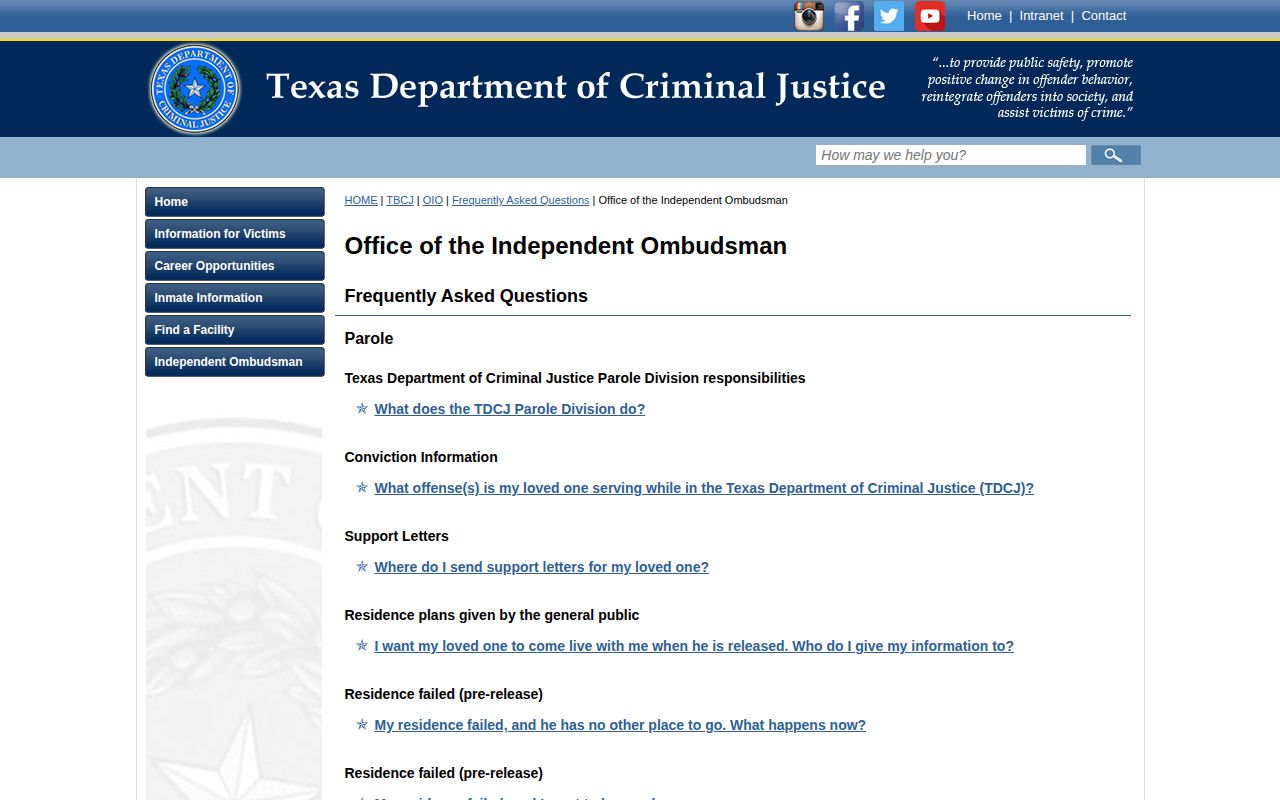
The image identifies the state guidance used to interpret a scheduled date, not an individual release result.
Kinney County Jail Credit
County-jail credit follows a different rule from TDCJ good time. Code of Criminal Procedure article 42.032 allows a sheriff to grant commutation for good conduct, industry, and obedience. The law says “may,” so the credit is discretionary. It permits up to one day for each day of the original sentence actually served when no misconduct charge has been sustained.
No Kinney County written credit table was found. Do not apply the maximum hypothetical rate to one person. Obtain the judgment, court-awarded jail credit, misconduct record if relevant, and the Sheriff’s actual calculation. The booking-out record confirms the event after it occurs.
A county sentence also can be affected by another agency’s hold. If staff say the person transferred, identify the receiving custodian and continue there. Physical departure from the Sheriff facility does not always mean release to the community.
Kinney TDCJ Date Fields
The TDCJ results list labels a Projected Release Date. A detail can also show Maximum Sentence Date and Parole Eligibility Date. When release processing advances, a separate scheduled-release block can show the scheduled date, type, and location. The labels must not be collapsed.
Projected release is a time computation. Parole eligibility marks a review threshold. Scheduled release is an operating plan after the agency receives a release certificate. Maximum sentence date reflects the sentence endpoint shown by TDCJ. None, by itself, proves the person left the unit.
Search by TDCJ number when known because it is the strongest key. SID is also useful. With a name, enter the last name and required first-name data, then narrow by available descriptors. Open the candidate and compare conviction county, offense, sentence, and identifiers before using any date.
Kinney Dates After TDCJ Release
The public TDCJ search is limited to current prisoners, so it cannot serve as a complete released-person archive. A missing former prisoner does not erase the state record and does not prove the exact release day. TDCJ offers an email inquiry route for incarceration history.
Email pia@tdcj.texas.gov with the full name and TDCJ number. If that number is unknown, provide exact birth date or approximate age and the conviction county. Put the person’s name in the subject. The service is described as no fee. For a broader official file, make a focused records request.
Government Code section 552.029 identifies release and parole dates, sentence, conviction, identifying data, unit information, and a department photograph among public TDCJ categories, subject to other law. A parole date shows release from confinement onto supervision. It is not the same as discharge from sentence.
Kinney Parole Timing Records
The Texas Board of Pardons and Paroles decides discretionary parole. TDCJ identifies a case before eligibility, and a three-member panel reviews it. Two votes control. An approval may include a program or transfer path. A denial may set another review date or require service of the remaining term, subject to applicable law.
No current public daily calendar of individual parole votes was found. Use Parole Review Information on the current TDCJ detail or call the Board status line at 844-512-0461 before a vote. After a vote, use the Parole Division release-status line. Board meeting minutes concern agency business, not a browsable list of individual release hearings.
An approval code is not a door-crossing timestamp. New information can cause withdrawal, and classification work may remain. Wait for scheduled fields, then confirm with the unit. Once the person leaves TDCJ, use IVSS and the Parole Division for supervision status.
Kinney Holds and Transfers
A detainer is notice that another agency may want custody. It can change what happens at the end of the current term. Instead of community release, the person may transfer to another county, TDCJ, USMS, BOP, or ICE. Ask for the receiving agency and event date.
KCDC makes this distinction especially important. Its federal agreement contemplates pretrial federal defendants, sentenced people awaiting BOP placement, and immigration cases. A KCDC departure can be an agency handoff. Use the federal docket and USMS for a pretrial defendant, the BOP locator for a designated federal prisoner, or ICE ODLS for immigration custody.
For local custody, call the Kinney Sheriff. For KCDC physical presence, call that facility. Pair the answer with the court record because a release event and the legal disposition answer separate questions. Note the date and source of every check.
Note: A transfer date should never be reported as an actual community release date.
Kinney Court Date Evidence
The court record explains why a county custody date changes. For a misdemeanor, contact the Kinney County Clerk. For a felony, use the district clerk and 63rd Judicial District route. Search by cause number when possible because no official Kinney public name-search portal was verified.
Read bond orders, judgment, sentence length, jail credit, revocation entries, and later corrections in order. A dismissal does not prove the exact moment of physical release if another hold existed. A bond order can authorize release, but the Sheriff booking-out timestamp is better proof of when the person left local custody.
If the judgment is unclear or dates conflict, ask the clerk for the filed order and ask the Sheriff for the calculation and release sheet. Do not solve a conflict with an unofficial sentence calculator. Court credit, agency credit, and an outside hold can each affect the outcome.
Record Kinney Lookup Dates
Date-stamp each lookup and copy the exact field label. Save the TDCJ or booking identifier, not just a name. If the value changes, compare the newer agency record with the judgment, credit, Board action, and any detainer information before describing the reason.
For an actual event, obtain the release sheet or agency history. A screenshot of a projected field documents what the system calculated at that time. It does not prove that release occurred on that day.