
No Kinney County 72-Hour Feed
The Sheriff’s official page offers contact information and VINELink, but no roster, released tab, archive, or rolling three-day view. No county URL, photo flag, field list, retention window, or refresh cadence exists for such a feed. A neighboring county interface cannot stand in for Kinney.
Treat 72 hours as a research range. Check one booking across official sources, record the event times, and resolve conflicts through the agency that held the person.
The VINELink landing page provides the documented notification and status route used in the fallback.
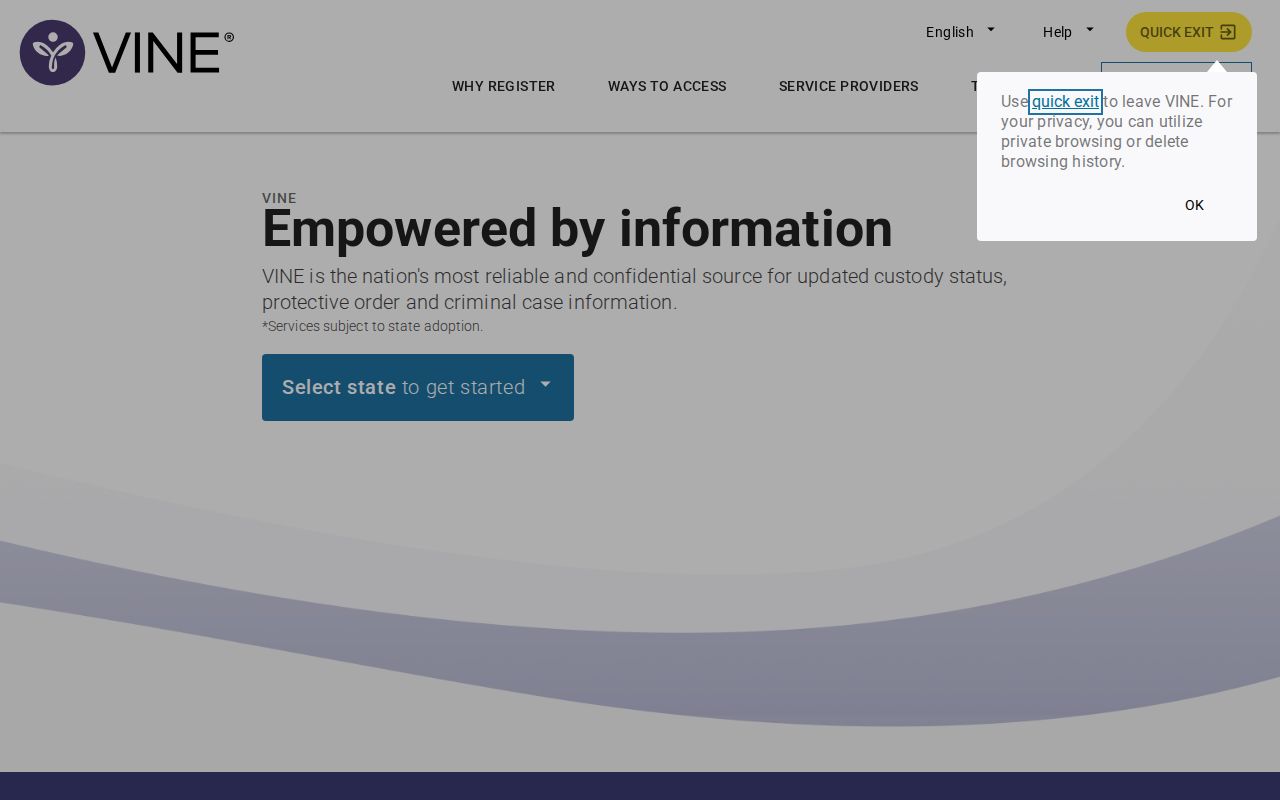
The interface may show a named source event, but it does not create an official three-day Kinney release feed.
Build a Kinney Three-Day Timeline
A wide review should capture changes rather than only today’s result. Work in this order:
- Search Texas VINELink and match source, identifiers, status, and event date.
- Call the Sheriff at 830-563-2788 or KCDC at 830-563-6222, based on physical custody.
- Ask whether the event was community release, transfer, or continued detention.
- Read the court chronology for a bond, dismissal, judgment, sentence, or revocation.
- Request the release sheet and receiving-agency field for durable proof.
Use the Kinney County 24-hour guide when only a same-day event is at issue. The three-day method is meant for delayed and split records.
Kinney 72-Hour Release Evidence
No official feed publishes a field set. Build a comparison from the records that do exist.
| Field | What it establishes |
|---|---|
| Name and booking number | Keeps separate bookings and same-name people apart. |
| Booking and release times | Places custody events inside the three-day range. |
| Release authority | Identifies bond, court order, time served, completion, or another basis. |
| Receiving agency | Shows whether custody ended or continued. |
| Court cause and filing date | Explains the legal sequence but may lag physical discharge. |
A judge can sign an order before jail staff complete discharge, while the clerk may docket it later. The release timestamp is the best proof of the physical event.
Kinney Weekend Release Timing
A 72-hour range can span days when agencies post at different times. Kinney County publishes no guarantee for how soon a VINE event or docket entry will appear. A Friday physical release may be followed by an electronic status event or filing later, so compare source timestamps rather than page-view dates.
Call the holding agency for urgent confirmation. Request the booking-out record and review the full docket when ordinary channels reopen. Do not move an event into Monday simply because that is when a page changed.
Note: The wider range catches split updates, but only a source timestamp identifies when physical custody ended.
Kinney Records Request Fallback
Email publicinformation@co.kinney.tx.us under the Texas Public Information Act. Identify one person and booking, provide a practical date range, and ask for the booking and release record electronically. Include the physical-release date and time, release type or authority, and receiving agency if transferred.
If the person was federally held at KCDC, the county may not own the decisive record. Use the federal docket and USMS for pretrial custody, BOP for sentenced federal custody, and ICE ODLS when immigration custody may follow. A KCDC departure proves only that the person left that building.
For state prison, TDCJ’s public search covers current confinement. Former-incarceration history comes through TDCJ’s official information service. A county record should not be used to describe a later TDCJ discharge.
Permanent Kinney Jail Register
Texas Local Schedule PS4200-06a requires permanent retention of the county jail register, including name, intake number, reason for confinement, and release or transfer date. PS4200-10 keeps booking-in and booking-out material plus commitment, transfer, and release orders for release or transfer plus two years.
These rules explain why a historical check can succeed after a status result disappears. They do not create an online display and do not override expunction or other law. Ask for the retained series by name and give enough detail to locate one entry.
Match the permanent register entry to the booking number, then seek the detailed booking-out record. That approach distinguishes an official release date from the date an unofficial page happened to refresh.
Classify Kinney Custody After Departure
The Sheriff handles local arrests and short county sentences. KCDC is a contract facility whose custody streams can include federal detainees. TDCJ holds state prisoners elsewhere in Texas. Each stream has different release proof.
For local custody, use Sheriff confirmation, VINE, the court record, and release sheet. For federal custody, use the owning agency and court. For state prison, use TDCJ. ICE may assume custody after a criminal hold ends, so a bond release need not mean release to the community.
Ask the source agency to name the next custodian. “Transferred” means custody continued, even when the person is no longer at the first facility. “Released” must be read with the system named in the record.
Kinney Release Data Has No Cadence
The county publishes no event-send cadence, guaranteed post-release visibility, or sheriff app with a three-day module. VINELink relies on agency feeds. A no-result can reflect spelling, lag, transfer, purge, or a different custodian.
Keep a log of the name searched, source agency, status, event date, call time, and staff response. Reconcile it against the release sheet. This creates a stable three-day finding without pretending Kinney runs a feed.
State the event and its scope, such as release from Sheriff custody or transfer out of KCDC. Precise wording prevents a building departure from being mistaken for the end of all custody.
Distinguish booking date from release date. An arrest in the range does not establish a release in it. A person booked earlier may leave during the period. Use the official release timestamp rather than the date an unofficial page gathered a name.
If systems conflict, preserve both readings and seek the source record. VINE is an event layer, while a clerk filing shows legal action. The owning agency addresses physical status, and the booking-out sheet preserves it.
For misdemeanors, the County Clerk is the records route. Felonies use the 63rd Judicial District process. Search by cause number when possible and review bond, judgment, jail credit, and later revocation entries.
Do not merge the Sheriff holding facility and KCDC merely because both are in Brackettville. One serves the local jail stream; the other may hold federal detainees. The proper locator and custodian depend on the stream.
Close the Kinney Three-Day Review
End the review only after the identity, agency, event time, and event type agree. If the records show transfer, follow the receiving system rather than recording a community release. If the court authorized release but the jail time is missing, describe the order and continue seeking the operational record.
A focused request should use one name, a useful identifier, and the approximate dates. Broad requests for every person released over a weekend are harder to process and can sweep in confidential material. Asking for one booking record produces a clearer answer and reduces the risk of joining unrelated events.
For a VINE record, save the source agency and event label, not merely the result screen. For a telephone check, note the office and time. For a court record, preserve the file-stamped entry. For the release sheet, retain the booking number and receiving-agency field. Together those items form a defensible timeline.
Do not turn the three-day window into a claim about county retention. Kinney publishes no web-retention period. Texas schedules govern the underlying records, while online visibility can end sooner. Expunction, confidentiality, and other law may also alter access.
Finish the Kinney Three-Day Review
A valid conclusion can remain limited. It is accurate to say the Sheriff confirmed departure while the receiving agency is still being checked. Do not upgrade that fact into a broad claim that all custody ended. Preserve the event time, agency, and booking identifier with the record.