
Kinney Booking Photos and Release Records
A booking photograph is created as part of arrest and intake. It can survive after release because a custody record does not vanish when a current roster changes. Texas Government Code Chapter 552 governs access to public information, but no simple rule makes every county booking photo available in every case.
Law-enforcement exceptions, juvenile confidentiality, privacy or security rules, expunction, nondisclosure, and other orders can affect production. Government Code §552.108(c) preserves basic information about an arrested person, arrest, or crime from the general law-enforcement exception, but it does not defeat every separate confidentiality rule.
The Texas Public Information Act text supplies the legal framework for county requests and public TDCJ fields.
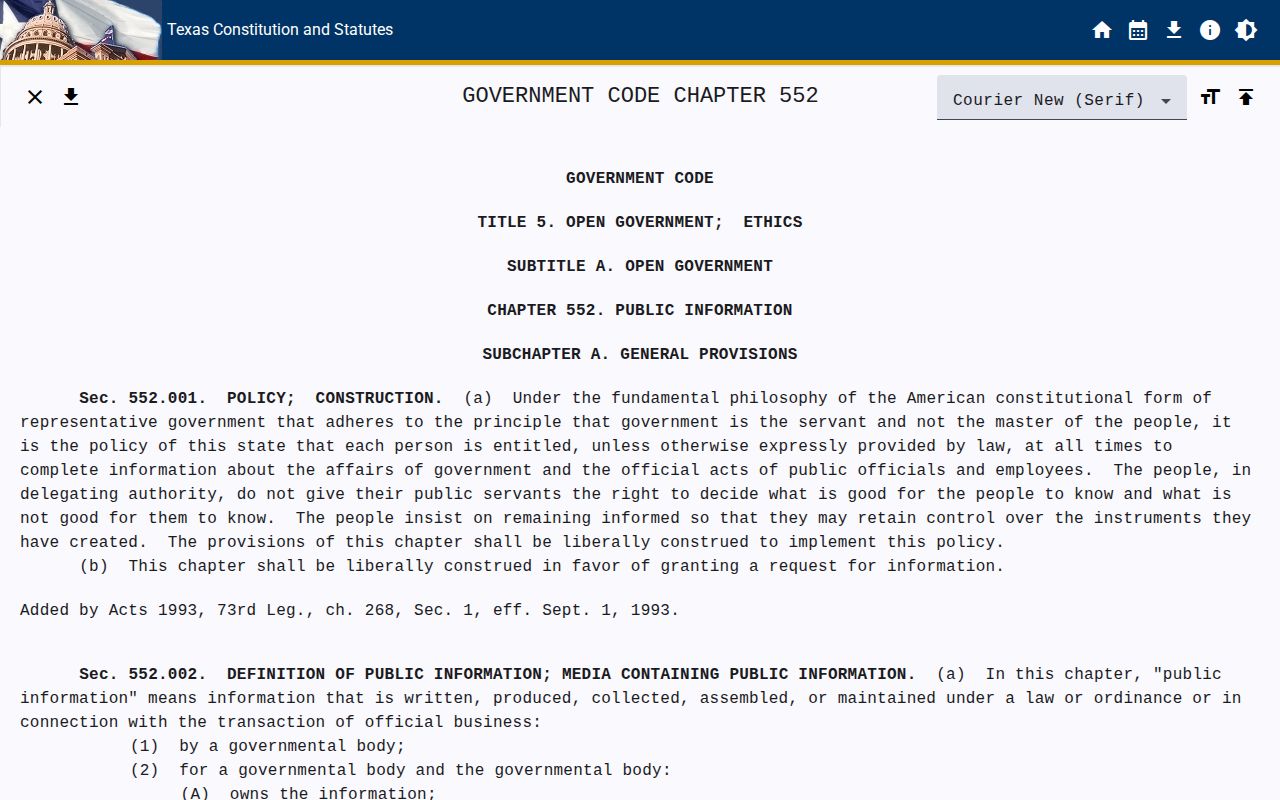
The statute is the access framework; it is not an online Kinney County mugshot gallery.
Release and case disposition must be checked apart from the image. A photo proves neither that the charge ended in conviction nor that the pictured person is still held. For release timing, seek the booking-out record and court chronology.
Kinney Released-Inmate Mugshot Channels
Each channel covers a different population. Start with the agency that created or owns the image.
| Channel | Has photo? | How to access |
|---|---|---|
| Kinney Sheriff web roster | No verified gallery | The official Sheriff page has no roster, release view, or photo gallery. |
| Kinney county records | Possible | Request one identified booking photograph by email. |
| TDCJ records | Yes, when public and held | A current detail may show a department photo; otherwise use the records route. |
| Texas DPS registry | Yes, narrow coverage | Only for people who are publicly registered, not all released people. |
| Federal agency records | Not guaranteed | Use the owning agency’s FOIA or privacy process. |
| News and third-party publishers | Sometimes | Treat as leads and verify against official records. |
VINELink may display identifying and status details supplied by a participating agency, but Kinney County publishes no fixed list of fields and no promise that a photograph is included. Do not treat it as a guaranteed image archive.
No Kinney Sheriff Mugshot App
The official Sheriff page has no visible current roster, recent-release photo view, social feed, or app-store link. Research found no verified Kinney Sheriff mobile app with booking-photo or jail-release functions. The Texas DPS app and registry are not Sheriff release tools.
This county-specific access choice means readers should not waste time looking for an official gallery that has not been published. Use the records request for a local booking image. The Kinney County 24-hour release guide explains the separate same-day status workflow.
An unofficial social account or app may copy a photo without showing the release authority, receiving agency, or later disposition. Confirm the publisher through the county before treating any such item as official.
Request a Kinney Booking Photograph
Kinney County directs public-information requests for county offices to publicinformation@co.kinney.tx.us. A narrow request is easier to locate and less likely to sweep in unrelated records.
- Identify the full name, approximate booking date, and booking number if known.
- State that the request is under the Texas Public Information Act.
- Ask for the booking photograph associated with that one booking, if maintained and public.
- Request electronic delivery and the releasable remainder if any part is withheld.
- Ask the county to identify the legal basis for withholding.
The Attorney General explains that requests go to the governmental body that holds the information. The body may seek clarification, apply state cost rules, or request an Attorney General decision if it seeks to withhold material. The ten-business-day rule often discussed in this process is chiefly a deadline to request an AG ruling, not a guarantee of production within that time.
A records request for a photograph is distinct from a request for a release sheet. Ask for both only when both are needed, and identify the same booking number so the image and release event can be matched.
TDCJ Photos for Kinney Commitments
Texas Government Code §552.029 expressly includes a TDCJ department photograph among public inmate-information categories. A current TDCJ detail may show the image with identifiers, conviction data, facility information, and projected fields. That photograph documents state-prison identity, not necessarily the earlier Kinney County booking.
TDCJ’s free email inmate-information service says it does not provide photos. If the person has left the current-only search, use TDCJ’s proper records route and identify the TDCJ or SID number. Do not ask Kinney County for a department photograph it did not create.
Likewise, the Texas DPS Sex Offender Registry includes a recent color photograph for public registrants, but it covers only people who have a registration duty. It is not a general archive of released Kinney County inmates.
KCDC and Federal Photo Ownership
KCDC can house people for federal authorities. Physical detention in Kinney County does not make every USMS, BOP, or ICE image a county record. The legal custodian may be the federal agency that owns the case and record.
BOP’s inmate locator is a status tool and should not be promised as a photo source. For USMS or ICE material, use the owning agency’s FOIA or privacy process. Access can depend on exemptions, identity proof, or authorization. A person’s disappearance from KCDC does not prove community release and says nothing about whether a photo should be public.
First identify whether the person was a local arrestee, federal pretrial detainee, sentenced federal prisoner, or immigration detainee. That classification determines where both the release proof and image request belong.
Kinney News and Publisher Images
News organizations have reported on Operation Lone Star custody in Kinney County and on past KCDC events. Those images document the event described in the report. They are not a comprehensive roster and should not be relabeled as current mugshots or proof of release.
Commercial and third-party publishers can carry stale, duplicated, mislabeled, or context-free images. Use such a page only as a lead. Do not pay a publisher for custody verification, and compare any image with the official booking identifier, release sheet, and case record.
Avoid commercial mugshot publishers and removal-service links. Official county, state, court, and federal sources remain the proper channels for the underlying record.
Correct or Restrict a Kinney Mugshot
Start with the agency that created the source record. Give the exact booking identifier and documentary support, such as a certified disposition or court order. A correction to the official record provides a sound basis for addressing copies elsewhere.
Texas expunction under Code of Criminal Procedure Chapter 55A can require covered agencies to return, destroy, or restrict specified arrest records when statutory conditions and a court order apply. Nondisclosure under Government Code Chapter 411 limits public disclosure of covered criminal-history information but is not the same as destruction. Release alone does not erase a booking photo.
Business & Commerce Code Chapter 109 applies to defined businesses that publish criminal-record information and charge to remove or change it. It provides accuracy and free dispute duties for covered publishers, including investigation within 45 business days and provisions addressing expunction or nondisclosure notice. It is not a blanket ban and does not make a commercial copy official.
Do not endorse a pay-to-remove service. Use the official correction route, the publisher’s legally required dispute process when applicable, and qualified legal advice for expunction or nondisclosure eligibility.
Verify Kinney Mugshot Identity
Keep the original request, response, image identifier, and certified order together. If an official page is wrong, point the custodian to the exact field and source record. If a publisher copied the image, submit corrected source material through its dispute channel.
A booking photo and release record have different access rules. The absence of a photo does not mean the booking was erased, and the continued presence of an image does not mean custody continues. Ask separately for the booking-out time and case disposition.
Compare stable identifiers rather than facial resemblance alone. Images may be old, poor quality, or tied to a prior booking. Match the booking number, approximate date, arresting agency, court, and name. Stop if the facts do not support the match.
When two photographs appear for similar names, request the image tied to the exact booking rather than selecting the clearer picture. The agency record should connect the photo to an intake number. That link is more reliable than captions copied by a publisher.
Preserve the context in any notes: the agency, booking date, and record source. Do not crop away a source label and then treat the image as proof of current status. Check the release record and court history as separate facts.
A Kinney booking photograph can also differ from a later TDCJ department photograph. Both may be authentic, yet each belongs to a different custody event. Identify which agency made the image before requesting correction or access.
Preserve Kinney Photo Context
Date each image reference and retain its agency caption. That context keeps a valid historical photo from being mistaken for proof of a current arrest, case outcome, release, or custody status.